
Random Winter Notes...
Survival 101

One of my survival tactics is participating in an Eco-Mindfulness program at a local nature preserve. This is a monthly program that combines guided breath work, walking meditations on nature trails, and group discussions on various books. We are currently reading and discussing our way through Douglas W. Tallamy’s insightful book Nature’s Best Hope: A New Approach to Conservation that Starts in Your Yard. This is a wonderful guide to turning your own backyard into a conservation corridor, a mini National Park. We sat in our circle of eco warriors last Saturday morning, breathing in and out together in unison and peaceful bliss. We sat in our circle of hope, reminding one another that the ice encrusted tundras in our back yards are the very best thing our gardens could ask for. The best survival tactic of a native garden is a consistently frozen dormancy season.
I have also been participating in an environmental book club since the begining of 2025. Our book for this month is Eager: The Surprising, Secret Life of Beavers and Why They Matter, by Ben Goldfarb. I am continually blown away by the books we read in this book club. They all seem to weave together as little parts of a larger puzzle. Four pages into Goldfarb’s book stopped me in my tracks. He is introducing the vital importance of beavers, and the wetlands they create.
“Trumpeter Swans squat rent-free atop beaver lodges, commandeering them as nesting platforms upon which their chicks shelter from land-bound predators like foxes… Swans are the poster child of the importance of beavers”
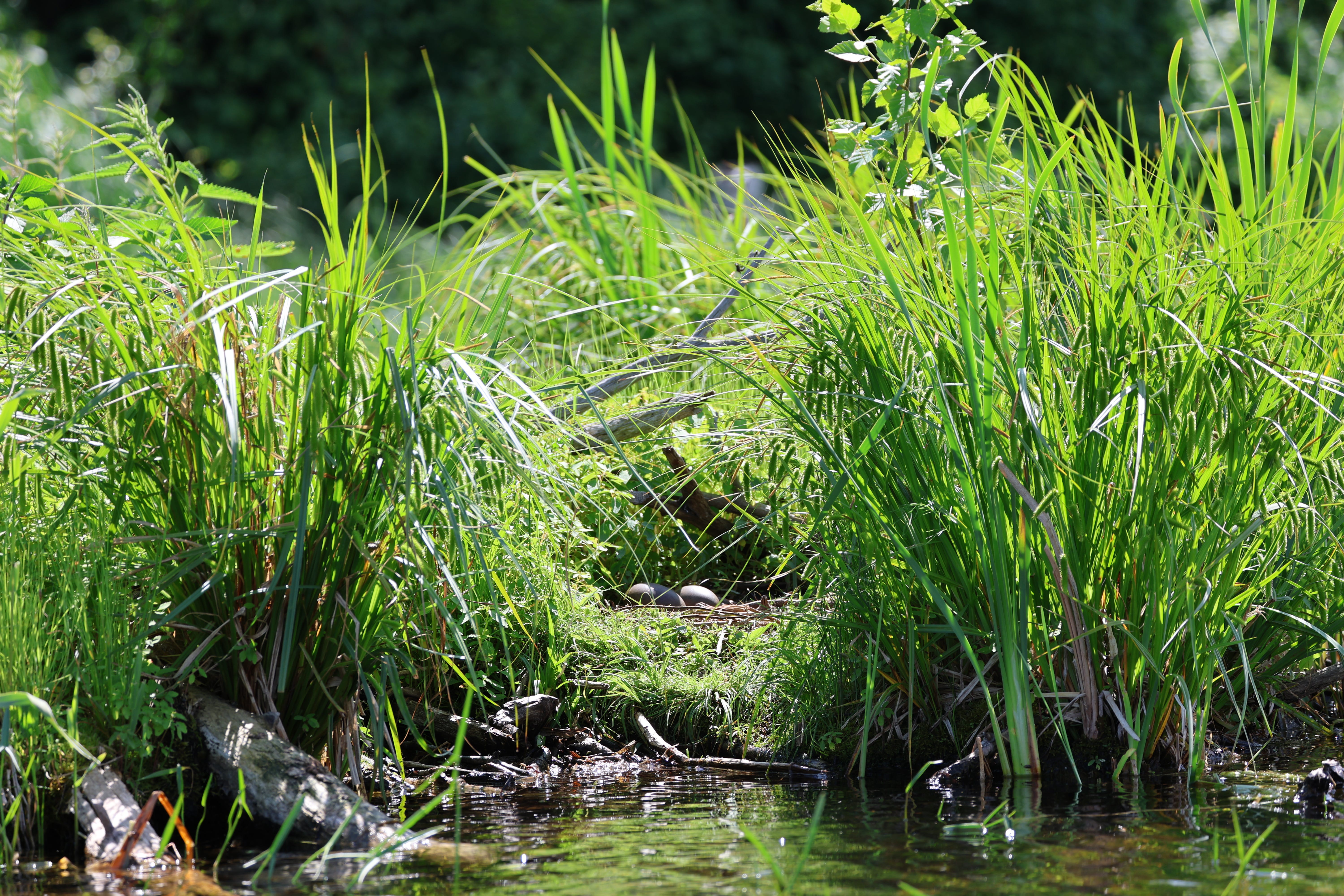
Last summer, while paddling a beaver-built wetland in Manitoba, I found exactly what Goldfarb described. At the time, I had no knowledge of the beaver lodge/swan nest connection. I also assumed the nest might be abandoned, as there were no adults anywhere nearby to defend it. (I later learned swans don’t sit on their eggs full time like most birds do) Even in my ignorance, the discovery felt extremely special. It felt like I saw something a human isn’t meant to see. It was among the most powerful gifts I have ever received in the wilderness. A very significant piece of the puzzle.
The experience of discovering this nest was so powerful that I fit it into the opening lines of a chapter within a fictional memoir I am writing, that is loosely based around the life of my ancestors in 17th century Quebec. A fourteen-year-old girl will find the bones of a Wendat infant & mother along the shoreline of her farm. The memoir I am writing is in the voice of the Wendat infant…
“The bones of my first mother form a circle around my smaller, infant-sized bones. Sand-washed white, picked clean of every last speck of meat, blood and sinew by a frenzy of ravenous birds, rodents, crabs and insects for weeks. We resemble a nest assembled of bleached, beaver-chewed driftwood sticks. Our skulls look like two mismatched Swan eggs you might stumble upon in tall reed grasses while foraging along a beach. I am going to tell you how my first mother and I ended up as this circle of bones that looks like a nest on the sandy grassy beach of a small cove where a rivulet feeds into the large river flowing around the island where we lived on the day she died.”
Speaking of ravenous animals, have been leaving meat scraps out for the fox who visits my pond every night. A few days ago I bought a small bag of dog food and put out a few handfuls. The next morning I noticed it hadn’t been touched, but throughout the day it was being devoured by Crows and to my surprise, Blue Jays!
I smile when I notice Juncos feeding on the seedheads of the “dead” native plant stalks that I leave uncut in the garden through winter. These are the only things sticking up out of the ice encrusted tundra of my back yard. The suffering of tiny animals unable to scratch through the frozen crust is offset by the contentment of the garden below. I throw seeds and nuts from a cup and they skitter across the icy yard, completedly gone within an hour by Juncos, Sparrows, Cardinals, and Titmice.
Last Saturday, I drove home from the Eco-Mindfulness program feeling full of peace and bliss. I felt relaxed and less stressful, which is the purpose of the program for its participants. We sat in our circle of hope that morning, contemplating the benefits for our backyard conservation coridors sleeping underneath the frozen ground.
It took less than ten minutes after returning home last Saturday for the serenity to shatter, and the resulting shock of discovering what happened on the streets of Minneapolis while we sat in meditation. Sucker punched. Winter in America.
I hope we survive this season
Environmental book club sounds great. I need one near me ...
Just added "Eager" to my library holds! Thanks for the recommendation!